
Nhu Nguyen
Medical Graduate / AP Science Mentor - Personalized Learning for Real Results - Study Smarter, Not Harder


Show all photos
Nhu Nguyen
Bachelors degree
/ 55 min
Nhu - About your AP tutor
AP courses can be challenging with fast-paced content, demanding workloads, and the pressure to achieve strong grades and exam scores, but success is not about studying harder—it’s about studying smarter. As a medical graduate with 2+ years of tutoring and mentoring experience, I provide personalized, student-centered learning designed around your goals, strengths, and learning style. I tailor every lesson using methods that work best for you, whether that means visual explanations, active recall, practice questions, mnemonics, or discussion-based learning. Beyond teaching concepts, I help students learn how to approach AP-style questions, identify patterns, manage time effectively, and build confidence before quizzes and exams. I use question-based learning and teach-back methods to ensure you actively engage with the material instead of simply memorizing facts. My goal is to help you truly understand the “why” behind concepts so you can apply your knowledge with confidence. More than a tutor, I work as a mentor and study partner who keeps you accountable, supports you through challenges, and helps you build the confidence and discipline needed to succeed. My goal is not only to help you earn a higher AP score, but to help you become a stronger, more independent learner who feels confident walking into every exam.
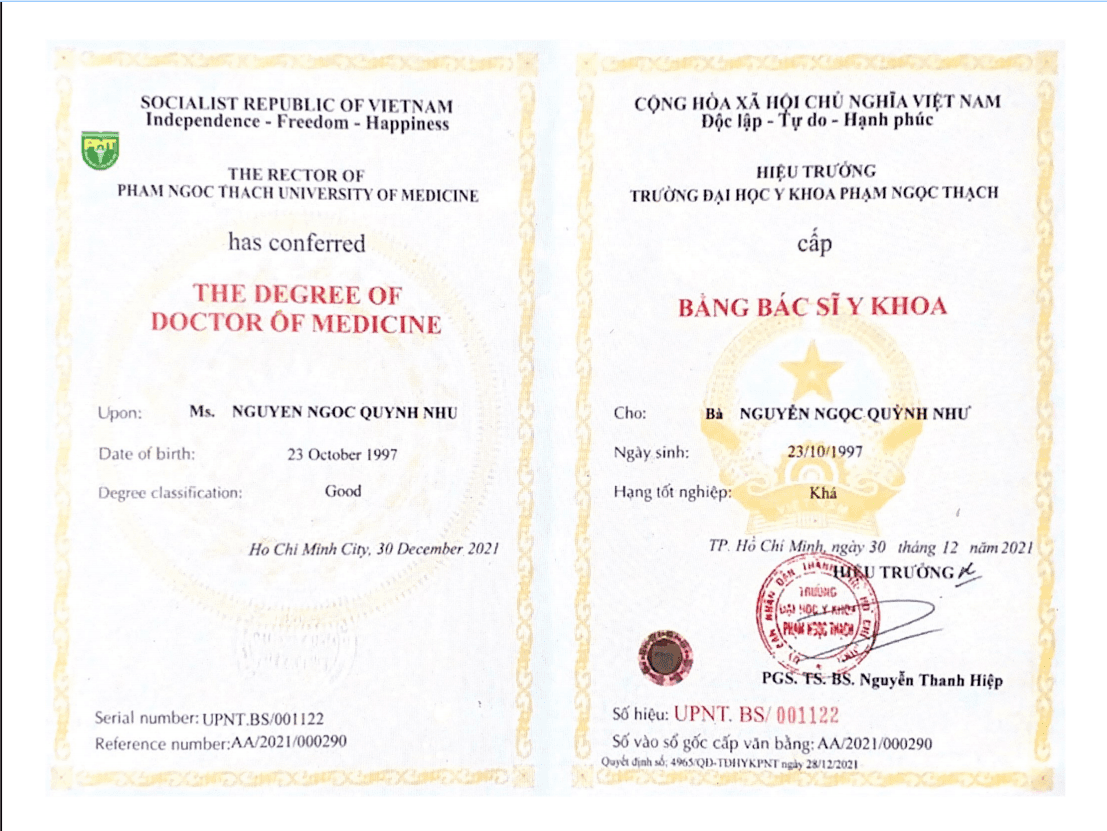
Nhu graduated from HCM University of Medicine and Pharmacy
AP tutor test prep specialities

AP Scoring Insights

Test taking techniques

College Credit

Practice Exams

Grade improvement

Study Plans
 CoTutor
AI modules
Summary
Podcast
Quiz
Learnings
Flashcard
Spotlight
Zero Risk Guaranteed
15-days refund
Free tutor swap
No cancel fee
1-yr validity
24/7 support
Nhu - also teaches

AP Biology
AP Physics 1
AP Statistics

AP concepts taught by Nhu
The Student and Tutor reviewed the Student's recent midterm results and discussed the core functions of a cell, including transportation, metabolism, communication, and the cell cycle. The session then provided an in-depth introduction to cellular respiration, covering the definition, purpose, ATP structure, and the four main phases of the process. For homework, the Student was assigned to research the input, output, and ATP yield for each phase of cell respiration.
Glucose: The Cell's Preferred Fuel Source
The Four Main Phases of Cell Respiration
Chemical Bonds & Energy Release in Respiration
ATP: Adenosine Triphosphate - The Universal Energy Currency
Framework for Studying Physiological Processes & Cell Respiration Overview
Core Cell Functions & Organelles
Student and Tutor continued their discussion on evolutionary biology, focusing on the role of genetic variation and natural selection. They then delved into the Hardy-Weinberg Equilibrium, practicing calculations and exploring the five conditions required for a population to be in equilibrium. The session concluded with an introduction to gene flow and genetic drift, with plans to cover sexual selection and other related concepts in the next class.
Genetic Variation & Natural Selection
Punnett Squares & Genetic Probability
Hardy-Weinberg Equilibrium Equation
Conditions for Hardy-Weinberg Equilibrium
Gene Flow vs. Genetic Drift
Student and Tutor reviewed key genetics concepts including dominant and recessive inheritance, alleles, gamete formation, and probability rules. They then focused on analyzing pedigree diagrams, learning how to identify autosomal versus X-linked and dominant versus recessive inheritance patterns. The Tutor offered to provide additional practice problems for follow-up.
Pedigree Diagram Fundamentals
Deducing Genotypes & Conditional Probabilities
Analyzing Pedigree Patterns: Autosomal vs. X-linked
Analyzing Pedigree Patterns: Dominant vs. Recessive
Genetic Probability Rules
The session focused on fundamental concepts in Biology, specifically the principles of evolution, including adaptation, natural selection, and homology. The discussion then delved into genetic variation, defining terms like alleles, genotype, and phenotype, and exploring their role in evolutionary processes. The Student and Tutor agreed to continue the lecture at a later time due to external noise.
Evolutionary Principles: Adaptation and Natural Selection
Homology: Evidence of Shared Ancestry
Genetic Variation: Alleles
Genotypes
and Phenotypes
Student and Tutor reviewed the fundamental concepts of glucose regulation, focusing on the roles of insulin and glucagon, and the functions of the pancreas, liver, and muscles. They also discussed the cellular mechanisms of insulin secretion and the involvement of different macromolecules within beta cells. The Student plans to continue the topic next week.
Pancreatic Hormones: Insulin & Glucagon
Blood Glucose Regulation Feedback Loop
Liver & Muscle: Glucose Storage & Release Roles
Macromolecules in Beta Cell Function
Insulin Secretion Mechanism: Beta Cell Response
The Student and Tutor reviewed Biology Unit 3 concepts, specifically covering the detailed structure, characteristics, and functions of the cell membrane, including various associated proteins and carbohydrates. They also discussed the fundamental differences between prokaryotic and eukaryotic cells, along with the specific structures and functions of prokaryotic components like pili, flagella, and plasmids. The plan for the next session includes completing the Unit 3 review, addressing any remaining questions, and potentially introducing Unit 4 topics.
Prokaryotic vs. Eukaryotic Cells
Extracellular Matrix (ECM) & Glycoconjugates
Key Prokaryotic Structures: Pili
Flagella
Plasmids
Cell Membrane Functions & Protein Roles
Cell Membrane Structure & Characteristics
Practical aids used by AP tutor

Presentations

Quizzes

Study Planner

Digital whiteboard

AP Assessments

AP tutors on Wiingy are vetted for quality
Every tutor is interviewed and selected for subject expertise and teaching skill.
