
Oluleye Babatunde
Math Mavens Unite: NAPLAN to SAT, I've Got You!


Show all photos
Oluleye Babatunde
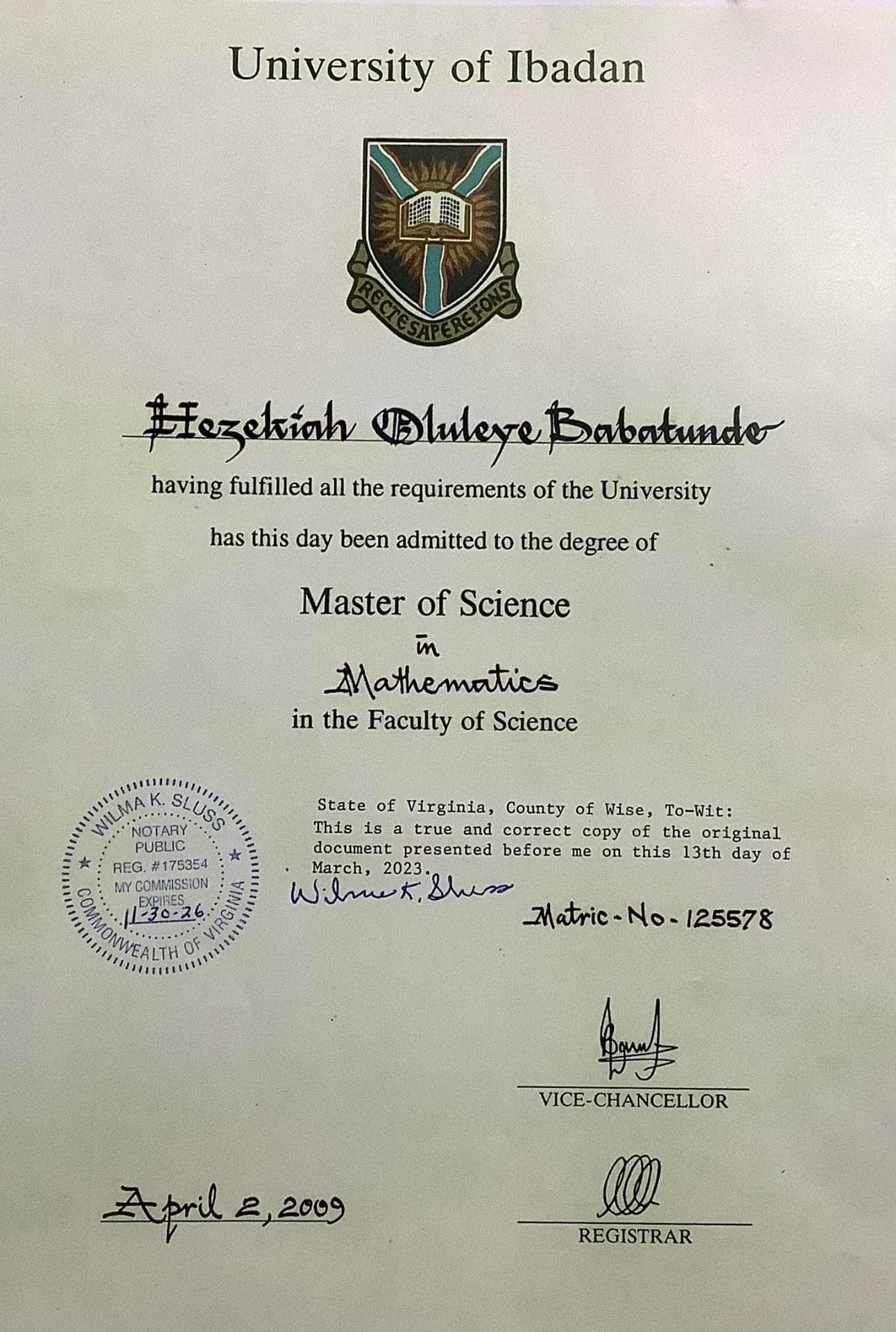
Masters degree
/ 55 min
Oluleye - Know your tutor
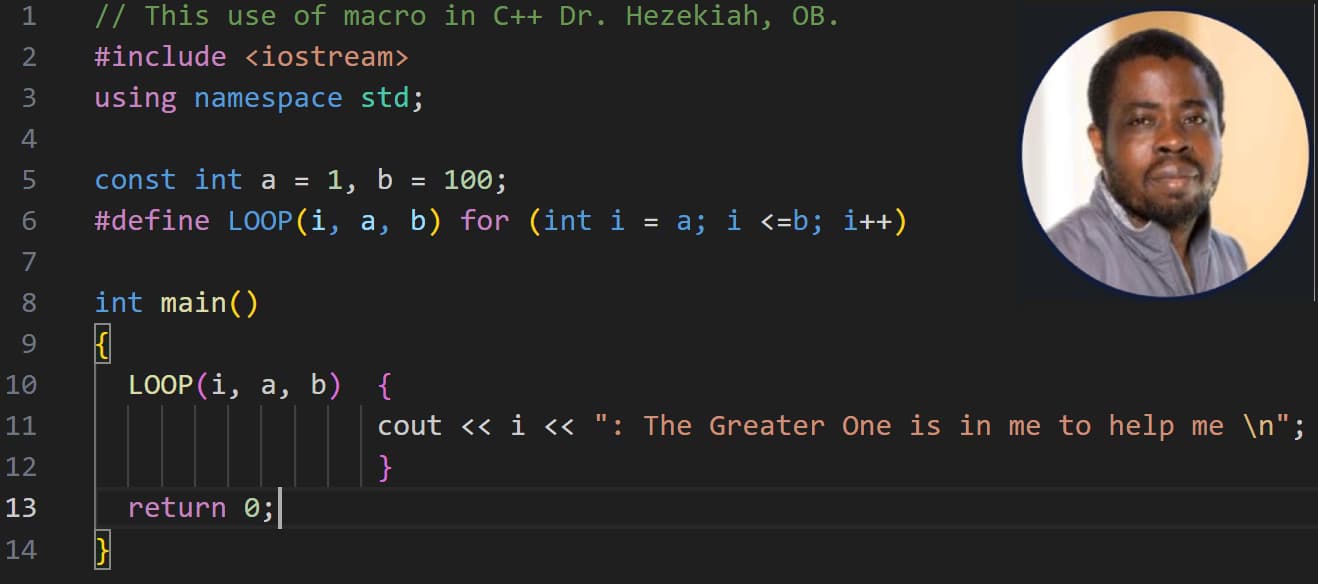
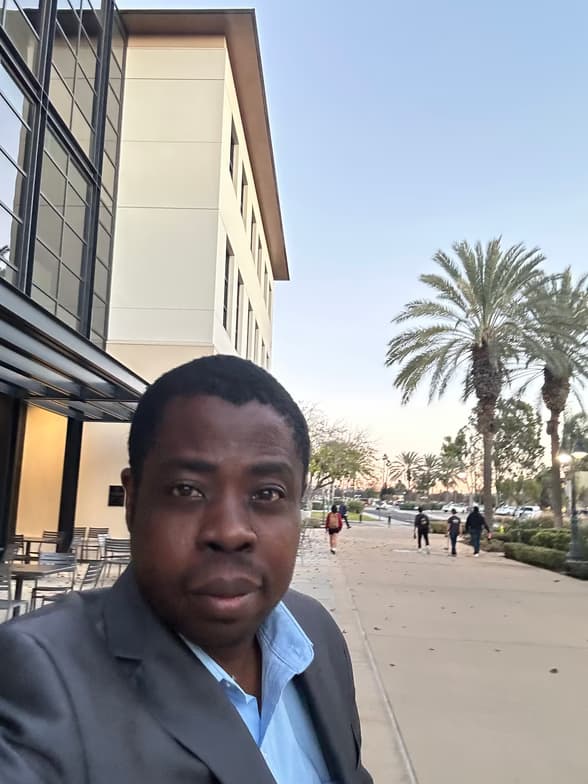
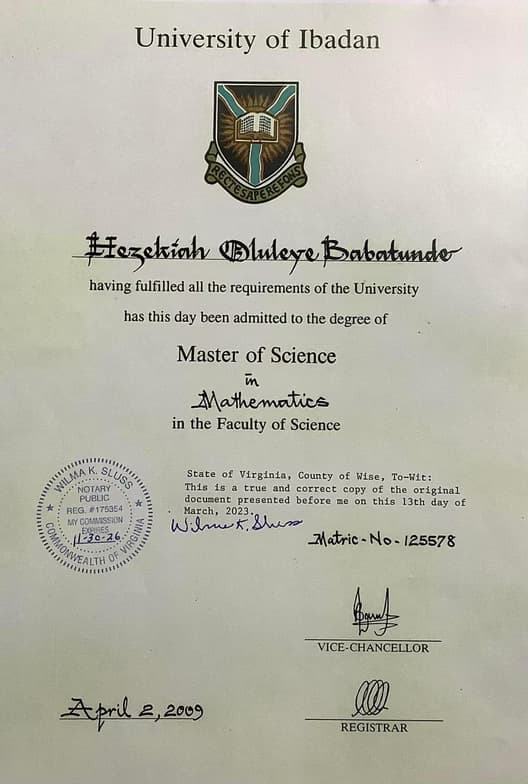
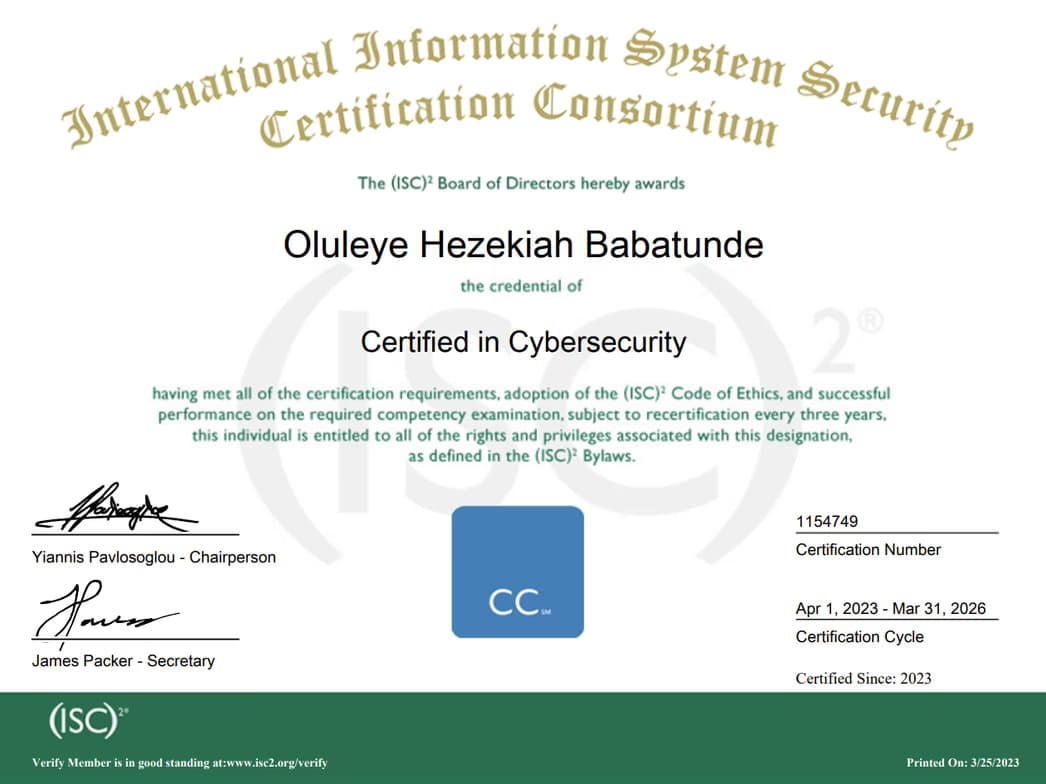
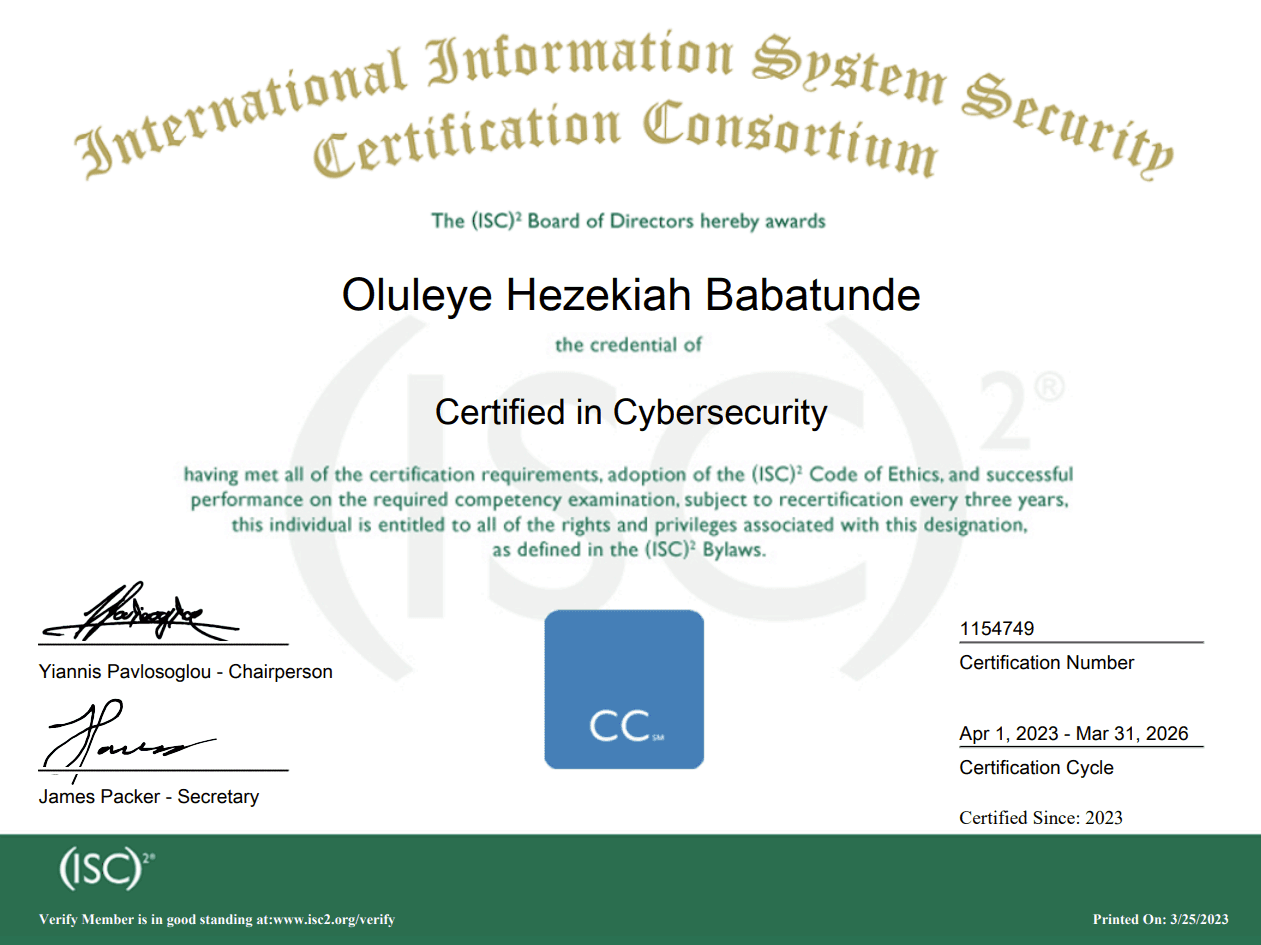
Dr Hezekiah Babatunde is a faculty at the University of Virginia’s College at Wise, VA, USA. He completed his PhD degree in Computer Science from the School of Computer and Security Science, Edith Cowan University, Perth, WA, Australia in 2015. He developed an award-winning computer-based vision system for automatic identification of plant species based on the images of their leaves during his Ph.D. candidacy. He also holds a B.Sc degree in Mathematical Sciences (computer major) and three different MSc degrees in Applied Mathematics, Computer Sciences and Organizational Leadership from FUNNAB, University of Ibadan and Charleston Southern University (USA) respectively. He has worked as a Postdoctoral Research Associate in Systems Biology in Professor John Yin’s Laboratory at the university of Wisconsin, Madison, USA where he studied and made research on Systems Biology. His interests cut across machine learning, image and signal processing, systems biology, operations research, mathematical modeling (using ODE, PDE and SDE). His educational, teaching, and research experiences span the region of Africa, Australia, and North America (USA). He has been teaching both online and in-class courses for more than 12 years, using several LMS tools such as Blackboard, Moodle, Canvas and Zoom. He uses other tools suitable for teaching computer programming, IT, and mathematics courses, and such includes Microsoft whiteboard, Google classrooms and few others. He is an Arcitura Certified Big Data Consultant and currently conducting research on data science solutions, information security, and systems biology (mathematical modeling and simulation of chemical and biological systems).
Oluleye graduated from University of Ibadan
 CoTutor
AI modules
Summary
Podcast
Quiz
Learnings
Flashcard
Spotlight
Zero Risk Guaranteed
15-days refund
Free tutor swap
No cancel fee
1-yr validity
24/7 support
Student types for classes

College students
Class overview
I teach computing and mathematics and I long to see the following (learning objectives) reflect in my students and classes: (a) cooperative learning (b) contents commitment (c) good communication (d) productive and applicable learning (e) independence. Today’s society demands that good citizens make good decisions. It is my philosophy to help create critical thinkers and good citizens via classroom engagements and to encourage youth for capacity and character development thereby contributing to national development. I believe building up students mathematically will foster creativity in scientific endeavours, thereby contributing to national development. I love developing my students character-wise by showing them examples of productive staff-to-staff and staff-to-employee relationships in academia and industry (from my past experience). This might motivate my students towards character development.

Mathematics concepts taught by Oluleye
The Tutor and Student reviewed fundamental concepts in Algebra II, including variables, coefficients, constants, and exponents within algebraic expressions and functions. They practiced solving linear equations, working with fractional equations, and applying the "butterfly method" for adding fractions. The session concluded with the student being assigned practice problems.
Algebraic Expressions
Linear Expressions
Solving Linear Equations
Additive Identity
Solving Fractional Equations
The tutor and student worked through calculus problems related to arc length and surface area of revolution. They practiced applying formulas, calculating derivatives, setting up integrals, and using substitution methods to solve complex problems, including a discussion on managing integration bounds during substitution.
Arc Length Calculation
Arc Length with Trigonometric Substitution
Surface Area of Revolution Formula
Integration Techniques for Surface Area
Changing Integration Bounds During Substitution
The Tutor and Student reviewed foundational Calculus 1 concepts, including differentiation rules like the power, product, chain, and quotient rules. They practiced solving derivative problems and explored an interactive digital learning platform. The Tutor plans to focus on Chapter 8 of the student's textbook, 'Calculus: Early Transcendentals, 9E' by James Stewart, for their upcoming quiz.
Derivatives: The Essence of Change
Understanding Constants vs. Variables
The Power Rule in Differentiation
Product and Quotient Rules

Math tutors on Wiingy are vetted for quality
Every tutor is interviewed and selected for subject expertise and teaching skill.
