
Anjali Singh
Engage with an Inspiring Science Educator for Interactive Learning and Practical Insights.
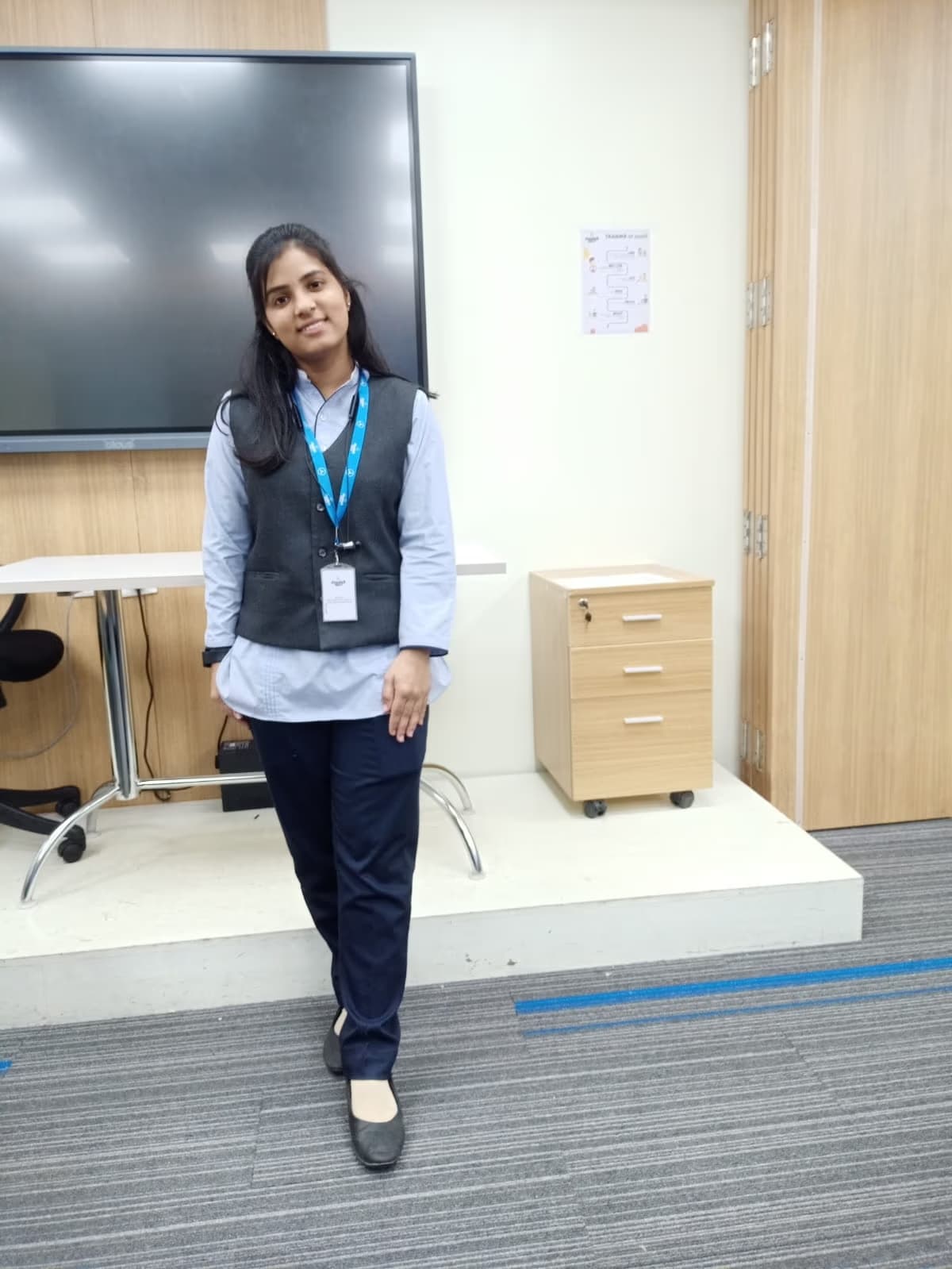


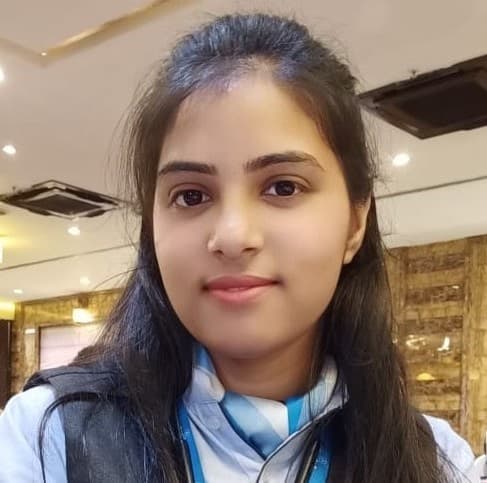
Private tutor - Anjali Singh
Masters degree
$35
$30
/ hour
About your science tutor
I'm Anjali Singh, a dedicated tutor with a Master's degree and over 3 years of experience. My expertise lies in School Science, Earth Science, and Astronomy for students ranging from Elementary School to College level. I specialize in personalized learning plans, exam simulations, and gamification of Math to make subjects like Baroque and Blues engaging. I offer a wide range of specialities including cultural immersion, physics experiments, French pronunciation skills, and test prep strategies. My teaching style focuses on real-world applications, role-playing scenarios, and quick math games to enhance understanding and retention. With me, you'll not only improve grades but also develop a deep appreciation for subjects like Bluegrass and Classical music. Let's embark on this learning journey together and unlock your full academic potential!
Anjali graduated from Deen Dayal Upadhyaya Gorakhpur University

Science class overview
My tutoring approach is centered on a collaborative style, focusing on laying strong fundamentals using visual models and real-world contexts in subjects like Astronomy, Earth Science, and School Science. I leverage a plethora of tech tools ranging from interactive 3D models to digital whiteboards to create engaging and interactive lessons. By following recognized curricula like A-Levels, AP, and IB, I ensure a comprehensive learning experience. My students, ranging from elementary to college level, benefit from personalized tutoring that caters to diverse learning styles, ensuring mastery of concepts and boosting academic performance.

Homework Stress? Not anymore
Students report reduced academic stress within weeks.

Strong Parent Endorsements
Rated 4.9/5 by parents for effective, result-driven tutoring.

Interactive quizzes for better retention
Students find it easy to learn with the tutor.
Specialities of your science tutor

State-Specific Standards (USA)

A-Levels (UK)

Next Generation Science Standards - NGSS (USA)

Career guidance

New Zealand Curriculum - NZC (NZ)

Advanced Placement (AP) Program (USA)

GCSE (UK)

Science experiments
Visual learning

To protect your payment, never transfer money or communicate outside the Wiingy website or app.

School Science concept taught by Anjali
Anjali tutored Ashley on electrophilic and nucleophilic aromatic substitution reactions, including reaction mechanisms, directing effects, and substituent effects. They discussed specific reactions like halogenation, Friedel-Crafts, nitration, and sulfonation, as well as benzyne mechanisms and methods for benzyne generation. They scheduled the next session for Wednesday at 1 p.m.
Electrophilic Aromatic Substitution (SEAr)
Activating/Deactivating Groups
Ortho/Para vs. Meta Directing Groups
Friedel-Crafts Reactions
Benzyne Mechanism
Leaving Group Effects
Reduction of Nitro Groups
Anjali is teaching Ashley about aromaticity, anti-aromaticity, and non-aromaticity in cyclic compounds. They cover Hückel's rule (4n+2), planarity, conjugation, exceptions like cyclooctatetraene, and aromaticity in heterocycles, including the role of lone pairs. Anjali also introduces Frost circles for visualizing aromaticity and explains Birch reduction, focusing on how substituents (electron-donating/withdrawing) influence the position of remaining double bonds. They briefly touch on NBS bromination and postpone aromatic substitution discussion.
Birch Reduction
NBS Reaction
Frost Circles
Heterocyclic Aromatic Compounds
Aromaticity
Hückel's Rule
Anjali is teaching Ashley about ether and epoxide chemistry. They cover Williamson ether synthesis (alkoxide + alkyl halide via SN2), ether reactions with acids (C-O bond cleavage, aryl ether resistance, SN1/SN2 considerations), and epoxide formation (using Br2/H2O then base, and using mCPBA with stereospecificity). The discussion emphasizes reaction mechanisms, common mistakes, and the importance of identifying nucleophiles and electrophiles.
Ether Reactions (Acidic Conditions)
Nucleophile/Electrophile
SN1 vs SN2
Halohydrin Formation
Epoxides
Williamson Ether Synthesis
Ether Nomenclature
Anjali and Ashley discussed alcohol formation using hydroboration-oxidation, oxymercuration-demercuration, and hydration, then moved on to Grignard reagents, covering their reactions with aldehydes, ketones, and esters. Ashley practiced drawing reaction products and mechanisms. They concluded with a discussion of Grignard reagent preparation and scheduled a follow-up session for Sunday to discuss reduction reactions.
Grignard Reactions with Esters
Hydration vs. Hydroboration/Oxidation
Carbonyl Reactions and Alcohol Degree
Grignard Reagent Preparation
Acidic Protons
Grignard Reagents: Base vs. Nucleophile
Anjali tutored Ashley on the preparation of alcohols from alkenes, covering hydration, hydroboration-oxidation, and mercuration-demercuration. They reviewed Markovnikov's rule, anti-Markovnikov's rule, carbocation stability, and stereochemistry, including syn and anti addition. They worked through examples, and plan to continue with the remaining alcohol preparation methods next session.
Markovnikov's Rule
Carbocation Stability
Acid Catalysis
Rearrangements
Hydroboration-Oxidation
Anti-Markovnikov's Rule
Syn Addition
Mercuration-Demercuration
Anjali and Ashley discussed E1 and E2 elimination reactions in organic chemistry, covering mechanisms, stereochemistry, and factors influencing each pathway. Ashley will practice problems on substitution and elimination and send her notes to Anjali for review.
Elimination Reactions
Anti-Periplanar Geometry
Stereospecificity vs. Stereoselectivity
E2 Reactions
E1 Reactions
Your science tutor also teaches

Earth Science
Astronomy
School Science
Free lesson slots
1 / 1
Teaching tools used by science tutor
Interactive diagrams
Video conferencing

Assessments

Presentations

Flashcards
Student types for science class

Elementary School
Middle School
High School
College

ADHD

ASD

Learning Disabilities

Anxiety or Stress Disorders

Home schooled
Interactive science lessons

Record lessons

Note taking

Pets are welcomed

Parent feedback

Open Q&A

Science tutors on Wiingy are vetted for quality
Every tutor is interviewed and selected for subject expertise and teaching skill.